
Anti-Climb Fencing in Ireland
Anti-climb fencing is welded mesh with gaps too narrow to grip. The standard is 358 mesh: holes of 76.2 by 12.7 mm in 4 mm wire. Most adults need 22 to 25 mm for a fingertip, so there's nothing to hold or stand on, and bolt cutter jaws can't get round the wire.
For depots, utilities, data rooms, compounds and any site where an ordinary mesh fence gets climbed.
Free, no obligation. One local contractor prices it, not five.
- 76.2 × 12.7 mmthe hole in 358 mesh
- 4 mmwire, welded at every crossing
- 22–25 mmwhat most adults need for a fingertip
- 1–20 minthe delay a security rating promises
Security fencing as fitted
Real fences, photographed where they stand: palisade and mesh.
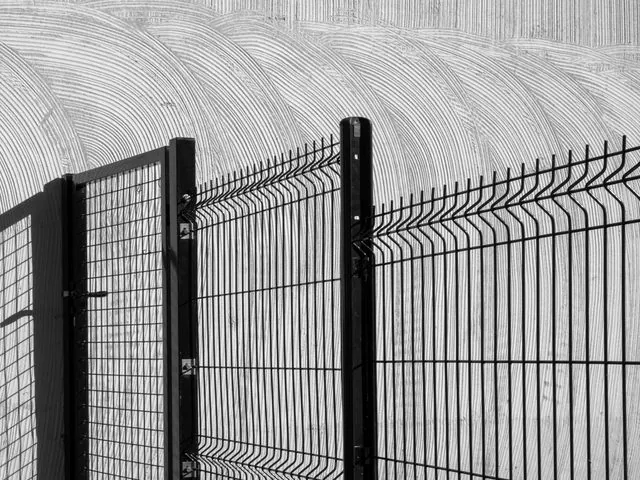
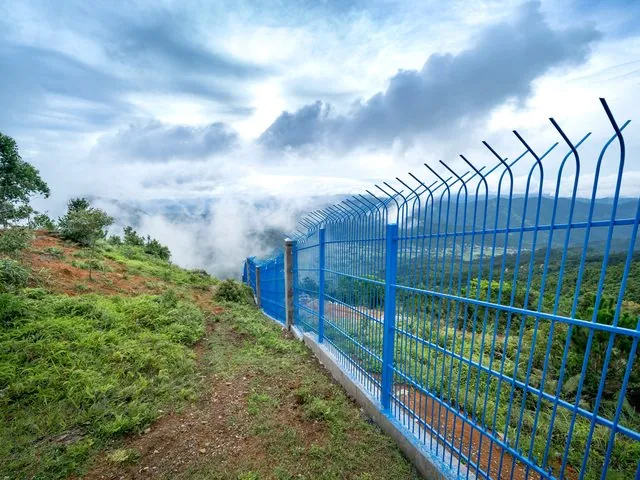
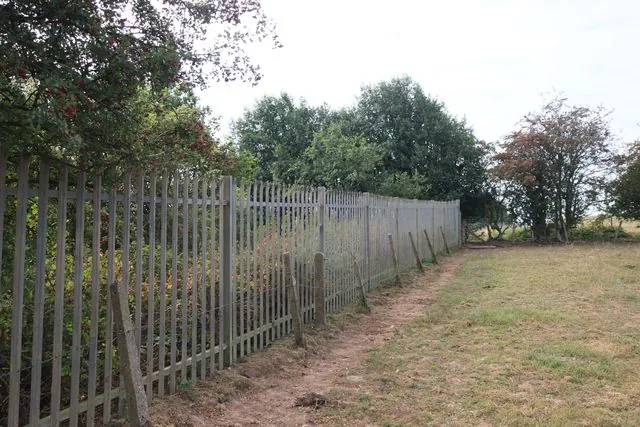
Why is it called 358?
What is 358 mesh?
Welded steel mesh with 3 inch by 0.5 inch holes in 8 gauge wire: 76.2 by 12.7 mm in 4 mm wire. The 3, the 5 and the 8 give it the name.
The narrow horizontal gap does two jobs. A fingertip or a boot toe won't go in, so the fence can't be climbed without tools. And a cutter needs its jaws either side of a wire, which the 12.7 mm gap doesn't allow, so it has to be cut one wire at a time with power tools.
| Fence | Hole size | Climb | Cut |
|---|---|---|---|
| V mesh (454) | Wide | Can be climbed with effort | Hand tools |
| Twin wire (656, 868) | 50 by 200 mm | Hard | Harder: heavier wire |
| Palisade | Gaps between pales | Pointed tops deter it | W-pale resists cutting |
| 358 anti-climb | 76.2 by 12.7 mm | No finger or toe hold | Power tools, wire by wire |
What does a security rating mean?
LPS 1175, from the Loss Prevention Certification Board, rates a whole fence: panels, posts, fixings and gates, tested together. Issue 8 gives each system a letter and a number.
- The letter, A to H: the threat. Higher letters stand up to heavier tools and more attackers.
- The number, 1, 3, 5, 10, 15 or 20: the minimum delay, in minutes, before a hole is made.
Most sites don't need a rated fence. Insurers, utilities and data centres sometimes ask for one: if yours does, ask for the certificate for the whole system, not just the panel.
Where is anti-climb worth it?
Where a fence keeps getting climbed or cut: plant and fuel compounds, substations and pumping stations, depots with vehicles or tools left overnight, and the rear of shops and warehouses.
Building sites get the same idea in temporary form: full-height anti-climb site panels (see temporary site fencing). For a frontage that only needs to look tidy, V mesh is enough.
More on fencing
Every fence is measured and priced on site.
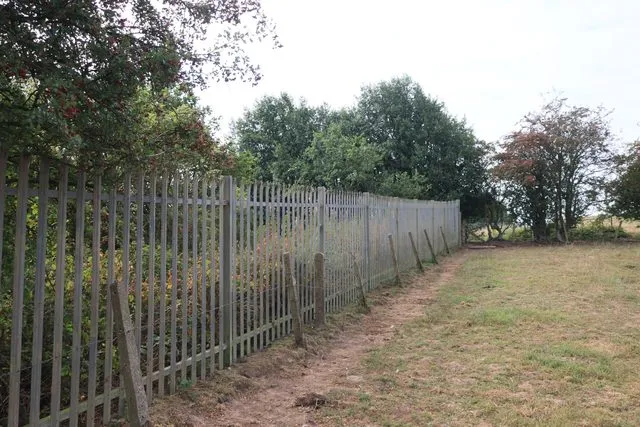 Palisade fencingSteel pales, pointed tops, the heavy deterrent. €330 a 2.75 m section.Palisade →
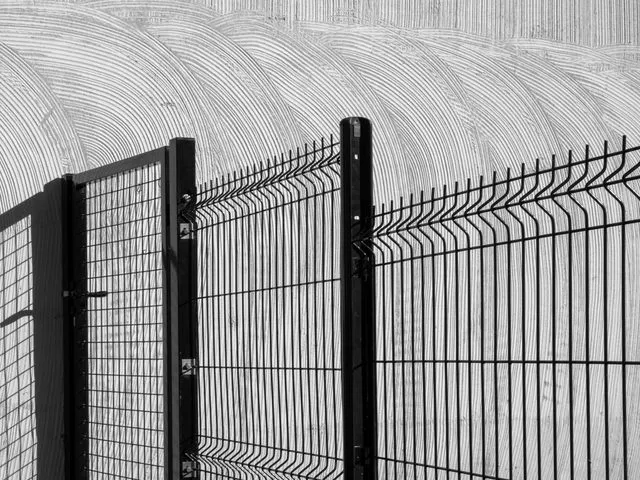 Mesh fencingWelded mesh panels: see-through, hard to climb. From €25 a metre.Mesh fencing →
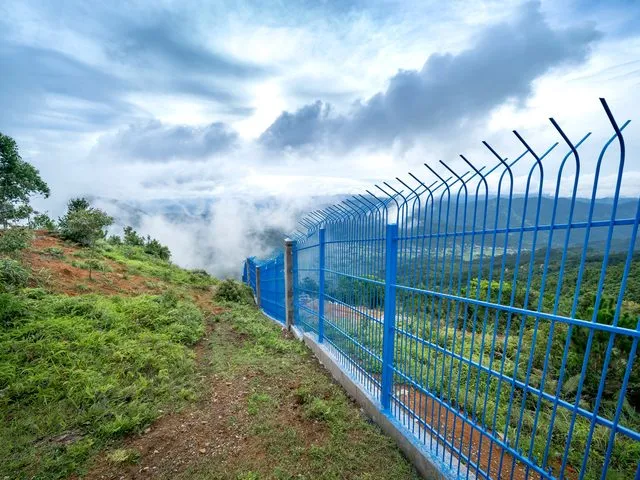 V mesh fencingFolded panels for schools, offices and frontages.V mesh →Temporary site fencingPanels on feet for building sites. €44–€63 a panel.Site fencing →
Get a fencing price in 4 quick taps
Tell us about the fence. It goes to one vetted fencing contractor who covers your county, and they ring you with a price, usually within one working day.
Security Fencing guides & price breakdowns
Straight answers to what people ask most: itemised costs, specifications, planning or grants, and what to check before you book.
More guides & resources: All guides & calculator hub · Technical & trade glossary · Frequently asked questions · All areas covered · About this site
Questions we get asked
Is anti-climb mesh worth it over twin wire?
Where a fence is being climbed or cut, yes: there's nothing to grip and it has to be cut wire by wire. For a frontage or a school, twin wire is usually enough.
Can 358 mesh be cut?
With power tools, yes, slowly. That's what a security rating measures: how many minutes a fence holds against a given threat.
Does it look like a prison fence?
It's see-through from a distance, and it comes galvanised or powder-coated, often green or black. It looks plainer than palisade.
Do I need planning permission?
Usually, yes. The planning exemption for walls and fences around a house covers capped walls, railings and wooden fences, but not a metal palisade or other security fence. Around a house, palisade needs permission at any height. On business and industrial land, a new fence is exempt only up to 1.2 m, or the height of the fence it replaces, and never over 2 m. On rural land, the limit is 2 m (not sheet metal). A 2.4 m palisade is over both, so it normally needs permission. Ask the council for a Section 5 declaration if you're not sure.
Who comes out?
One vetted fencing contractor who covers your county. Your number isn't sent to a list. They ring you, ask about the site, usually arrange a look, and give you a written quote. Nothing is ordered until you say yes.
Security Fencing across all 26 counties
Requests from all 26 counties go to one vetted local specialist who covers your county — from Dublin, Cork, Galway and Limerick to Kildare, Meath, Wicklow, Waterford and Donegal. Pick your county below for local prices, specifications and advice. Compare all areas covered →
Get a free security fencing price
One contractor who covers your county rings you, usually within one working day. Nothing is ordered until you say yes.